Research Article | | Peer-Reviewed

Impact of Customer Relationship Management on Client Satisfaction at the Banking Industry in Chattogram

Received: 29 October 2024     Accepted: 13 November 2024     Published: 3 December 2024
Views:       Downloads:
Abstract

This study investigates the impact of Customer Relationship Management (CRM) practices on Customer Satisfaction (CS) in the banking sector of Chattogram, Bangladesh. Focusing on three primary CRM constructs—Service Quality (SQ), Handling Complaints (HC) and Employee Behavior (EB)—the research aims to identify which factors most significantly influence customer satisfaction. Using a sample of 108 respondents obtained through convenience sampling, the study employs quantitative analysis via Statistical Package for Social Sciences (SPSS) to analyze the relationships between these CRM elements and customer satisfaction levels. The descriptive statistics indicate high mean scores for all CRM constructs, suggesting generally positive customer perceptions. The results demonstrate that complaints handling has the strongest positive impact on customer satisfaction, followed closely by service quality, while employee behavior has a moderate effect. Based on these findings, key recommendations for banks include enhancing complaints resolution processes, standardizing service quality and investing in CRM technology to optimize customer interaction management. This study underscores the importance of effective CRM practices in improving customer satisfaction within Chattogram’s banking sector and provides actionable insights for banks aiming to strengthen customer relationships and enhance satisfaction outcomes. The findings contribute to the growing body of CRM literature and provide valuable guidance for banks looking to refine their customer-centric strategies in a competitive market environment.

Published in Journal of Finance and Accounting (Volume 12, Issue 6)
DOI 10.11648/j.jfa.20241206.12
Page(s) 156-164
Creative Commons

This is an Open Access article, distributed under the terms of the Creative Commons Attribution 4.0 International License (http://creativecommons.org/licenses/by/4.0/), which permits unrestricted use, distribution and reproduction in any medium or format, provided the original work is properly cited.

Copyright

Copyright © The Author(s), 2024. Published by Science Publishing Group

Keywords

Service Quality, Employee Behavior, Handling Complaints, Customer Satisfaction, SPSS, Bangladesh

1. Introduction
The modern dancing banking sector is defined by significant dynamism and turbulence, characterized by several developments including new rules, alterations in customer behavior and heightened dependence on technology for communication and fierce market competition . In order to stay competitive, banks must dedicate significant efforts towards creating added value. One effective strategy to achieve this is by fostering and nurturing long-term customer relationships that offer more value than just the banking products themselves. However, in today's landscape, building added value is a challenging task due to the similar activities of competitors that often diminish the unique value proposition of any business . Notwithstanding the substantial transformations the banking industry has experienced across multiple business segments in the last twenty years, including the heightened utilization of Automated Teller Machines (ATMs), personal computers, Internet and mobile banking, alongside decreased transaction costs and enhanced service speed, the management of supplier-customer relationships continues to be a pivotal concern in the banking sector. The Customer Relationship Management (CRM) concept was initially introduced in the early 1970s, primarily through physical meetings to conduct customer satisfaction surveys. In 1982 database marketing was introduced, which involved the use of statistical methods to analyze and collect customer data . This concept was later commercialized as customer relationship management through various communication tools and software, gaining widespread popularity after 1996. Now-a-days customer satisfaction is the most important factors in retaining customers through CRM implementation. In today’s world, if competitors want to achieve additional market share they must treat and reach to customers exceptionally and competently .
This article aims to demonstrate the influence of customer relationship management on customer satisfaction within the banking industry of Chittagong, Bangladesh. Here researchers have used three independent variables namely service quality, complaint handling and employee behavior. Researchers have tried to show how these three variables affect customer satisfaction, a key aspect of CRM. The data for this research are collected by questionnaire and researchers used SPSS for the analysis.
2. Related Work
CRM is a multidimensional construct that is perceived from different viewpoints such as technology, policy and philosophy depending on the context and situation. CRM has emerged as a possible mechanism for achieving long-term competitive advantage for most organizations across various sectors . Building a good customer relationship is not only a requirement, but also a key to differentiation. Relationship Management (RM) is a crucial strategic tool for customer management that focuses on understanding consumers as individuals rather than as a packaged party. The aim of CRM is to find and keep customers and assists in increasing the profitability . CRM allows businesses to adapt their goods and services to their customers' preferences and provide more personalized services . CRM is strategically significant; however, personal bankers operationally manage these relationships as advisers. They are responsible for daily interactions with customers, fostering two-way communication, and delivering tailored information and advice on various banking matters. The advising process typically transpires during face-to-face meetings, as this is the most effective communication route for personal bankers to demonstrate their dedication to customer relationships .
In the field of marketing, client fulfilment is acknowledged as one of among the most extensively researched constructs. This is vital in the business industry as it can retain existing clients and attract new ones. The happiness or sadness a person feels when they compare how a product or service works to what they were expecting . Customer satisfaction is the assessment and comparison of a consumer's expectations prior to purchasing for a product or service against their post-purchase experience with that same product or service. Customer satisfaction is defined as the perception of the alignment or disparity between post-purchase experiences and expectations regarding a product or service's capacity to meet customers' objectives effectively . Satisfied customers serve as brand ambassadors and advocates for the company by spreading positive word of mouth frequently . Customer happiness is a strong predictor of client loyalty, which in turn affects the likelihood that a customer will buy again .
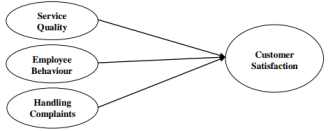
In an effort to gain a better understanding of the aspects that contribute to successful customer satisfaction, the notion of quality of service is gaining more and more popularity in the academic literature. Studies have shown that the quality of service has a significant association with client happiness and has a favorable impact on the level of satisfaction that customers feel . Firm profitability and customer loyalty there are a few ways to improve service quality , including: 1) Meeting consumer expectations for good service & offering a wide variety of items 2) Offer high-quality goods at an affordable cost 3) Dealing with product complaints from customers. Based on above discussion researcher develop Hypothesis-1: Service Quality (SQ) has a significant impact on Customer Satisfaction (CS) in the banking sector in Chittagong, Bangladesh.
Numerous studies have sought to investigate the correlation between employee behavior and customer happiness. Researchers discovered that a cheerful visage positively influences consumer satisfaction. Numerous research have demonstrated the significance of amicable behaviors (friendliness, care, politeness, responsiveness, trustworthiness, helpfulness, and understanding) exhibited by service personnel in enhancing service outcomes and fostering enduring partnerships . Researchers have indicated that client fulfilment is frequently contingent upon the relationship with a single contact employee; hence, the expense of replacing such an employee encompasses a decline in satisfaction, potentially resulting in the loss of crucial clients. Positive employee actions can have the effect of increasing the pace at which employees respond to customers and ensuring that employees are polite and respectful to customers, both of which increase customer satisfaction with the services provided . When an employee acts in his or her own actions, a reverse pattern of results is to be anticipated. In such circumstances, a consumer may perceive that the company fails to deliver the anticipated symbolic value benefits, perhaps resulting in an unfavorable perception of the company . Based on above discussion researcher develop Hypothesis-2: Employee Behavior (EB) has a significant impact on Customer Satisfaction (CS) in the banking sector in Chittagong, Bangladesh.
A customer complaint can be described as a customer's disappointment with a particular brand that they have purchased. Ignorance, confusion, inflated expectations, and disputes are all factors that can contribute to consumer complaints . In the contemporary business landscape, characterized by heightened customer awareness, ensuring customer satisfaction is a duty of Customer Relationship Management (CRM) undertaken by all business proprietors. Complain handling with the objective to highlight the feature of effective complain handling process. Organization should take complain as a chance to rectify internal mistakes and to improve product and service standard . Companies should encourage its customers to file complain if there is any. It will allow companies to understand the challenges faced by customer. Researchers conducted research to identify the key feature of to have satisfied customer in banking industry in Pakistan. A researcher identifies service quality dimensions, Service feature and complains handling. Researcher found that complain handling have direct relationship and impact on customer satisfaction. The study concluded that an unresolved service issue significantly affects the customer's perception of the service provider . Based on above discussion researcher develop Hypothesis-3: Handling Complaints (HC) has a significant impact on Customer Satisfaction (CS) in the banking sector in Chittagong, Bangladesh.
Figure 1. Conceptual Framework.
3. Objectives of the Study
The main aim of this research is to analyze the constructs associated with customer relationship management that significantly influence satisfaction among consumers in the banking sector of Chattogram, Bangladesh. Other specific objectives are:
1. To demonstrate how much customer satisfaction is changed based on the consequences of CRM practices.
2. To make some recommendations for the banking sector in Chattogram, based on the finding of this research, in order to improve customer satisfaction through effective CRM activities.
4. Proposed Methodology
This research is fundamentally quantitative in nature. This research employs a descriptive research design due of its well-articulated objectives. The research procedure is entirely formal and systematic, with data analysis being quantitative. The target audience of this study comprises all those who are beneficiaries of Chattogram's banking industry. The corresponding subsection of this group comprises individuals in the banking sector of Chattogram, Bangladesh. The non-probability convenience sampling methodology has been employed due to its cost-effectiveness and minimal time requirements compared to other sampling methods. The survey persisted from May 2024 until July 2024. The survey questionnaire was distributed using offline as well as online techniques. The questionnaire link was disseminated to 132 participants by email, Facebook Messenger, and WhatsApp. Of the 132 responders, 108 participated in this poll. The overall size is 108. The questionnaire was constructed with a five-point Likert scale, with responses ranging from "strongly disagree=1" to "strongly agree=5". This study utilizes primary as well as secondary data sources. The gathered data has been analyzed utilizing two software programs: Microsoft Excel and Statistical Package for Social Sciences (SPSS) edition 29.
5. Data Analysis and Discussion
Statistical instruments were employed to analyze observable variables. Adequate statistical methods including descriptive statistics, regression evaluation, correlation analysis and graphical representations such as tables and diagrams have been employed to classify, tabulate & interpret the data received from the study's respondents.
Table 1. Case Processing Summary.

Variables

Valid

Missing

Total

N

Percent

N

Percent

N

Percent

SQ

108

100.0%

0

0.0%

108

100.0%

HC

108

100.0%

0

0.0%

108

100.0%

EB

108

100.0%

0

0.0%

108

100.0%

CS

108

100.0%

0

0.0%

108

100.0%

Source: Primary Data
The Case Processing Summary (Table 1) provides an overview of the dataset's completeness. All four variables have 108 valid responses, with no missing data, ensuring the data's integrity and full participation. Each variable exhibits a 100% response rate, meaning every participant responded to all questions related to these constructs. This high data quality indicates a robust dataset for analyzing the impact of CRM components on client satisfaction in the banking sector in Chattogram.
Table 2. Descriptive Statistics.

Statistic

Std. Error

SQ

Mean

4.1481

0.04977

95% Confidence Interval for Mean

Lower Bound

4.0495

Upper Bound

4.2468

Variance

0.268

Std. Deviation

0.51727

Skewness

-0.116

0.233

Kurtosis

-0.820

0.461

HC

Mean

3.9537

0.05801

95% Confidence Interval for Mean

Lower Bound

3.8387

Upper Bound

4.0687

Variance

0.363

Std. Deviation

0.60290

Skewness

0.063

0.233

Kurtosis

-1.213

0.461

EB

Mean

4.3727

0.04749

95% Confidence Interval for Mean

Lower Bound

4.2785

Upper Bound

4.4668

Variance

0.244

Std. Deviation

0.49353

Skewness

-0.547

0.233

Kurtosis

-0.130

0.461

CS

Mean

4.0856

0.05416

95% Confidence Interval for Mean

Lower Bound

3.9783

Upper Bound

4.1930

Variance

0.317

Std. Deviation

0.56283

Skewness

-0.383

0.233

Kurtosis

-0.548

0.461

Source: Primary Data and Author Calculation
The Descriptive Statistics table provides key insights into each variable. According to table 2, all constructs show relatively high mean values, indicating a positive perception of CRM dimensions, especially Employee Behavior (EB) with the highest mean. The distribution characteristics—skewness and kurtosis—are within acceptable ranges, supporting a reasonable normal distribution assumption. Here’s a summary of the key metrics:
Service Quality (SQ): Mean 4.1481, indicating generally high ratings for service quality and the true mean likely lies between 4.0495 and 4.2468. Table 2 shows that moderate variability in variance & standard deviation (variance 0.268; std. deviation 0.51727). Slight negative skewness (-0.116), suggesting a near-normal distribution with a slight left lean; kurtosis (-0.820) shows a flatter-than-normal distribution.
Complaints Handling (HC): Mean 3.9537, indicating a fairly positive perception of complaints handling and the mean is estimated between 3.8387 and 4.0687. Table 2 shows that slightly higher variability in variance & standard deviation (variance 0.363; std. deviation 0.60290). Almost symmetrical (skewness 0.063) with flatter distribution (-1.213 kurtosis), indicating low extreme responses.
Employee Behavior (EB): Mean 4.3727, suggesting very positive perceptions of employee behavior and likely between 4.2785 and 4.4668. Table 2 shows that lower variability in variance & standard deviation (variance 0.244; std. deviation 0.49353). Negative skewness (-0.547) indicating a slight lead to higher ratings and close to normal kurtosis (-0.130).
Customer Satisfaction (CS): Mean 4.0856 is showing overall positive satisfaction levels and likely between 3.9783 and 4.1930. Table 2 shows that moderate variability in variance & standard deviation (variance 0.317; std. deviation 0.56283). Negative skewness (-0.383) suggests a slight tendency towards higher satisfaction scores and slightly flatter distribution (-0.548 kurtosis).
Table 3. Test of Normality.

Variables

Kolmogorov-Smirnov

Shapiro-Wilk

Statistic

df

Sig.

Statistic

df

Sig.

SQ

0.112

108

0.002

0.962

108

0.004

HC

0.145

108

0.000

0.936

108

0.000

EB

0.130

108

0.00

0.917

08

0.000

CS

0.140

108

0.000

0.957

108

0.001

Source: Primary Data and Author Calculation
Table 3 indicates that the distributions of data significantly deviate from normality. This suggests that non-parametric statistical methods or transformations may be appropriate for further analysis if normality is required.
Kolmogorov-Smirnov Test: All variables have p-values (Sig.) below 0.05, indicating a significant deviation from a normal distribution. SQ, HC, EB and CS do not follow a normal distribution according to this test.
Shapiro-Wilk Test: Similarly, the p-values for all variables are below 0.0. This further confirms that none of the variables meet the assumption of normality.
Given that the significance threshold is lower than.05 (Table 4), this indicates that there is a difference between the baseline model and the final model at this point.
Table 4. Model Fitting Information.

Model

-2 Log Likelihood

Chi-Square

df

Sig.

Intercept Only

446.410

Final

354.144

92.266

3

0.000

Source: Primary Data and Author Calculation
Table 5. Goodness-of-Fit.

Chi-Square

df

Sig.

Pearson

783.677

771

0.368

Deviance

339.470

771

1.000

Source: Primary Data and Author Calculation
As can be seen in Table 5, the value that is considered significant is more than 0.05. It suggests that the data that was observed is having a good quality of fit with the model that was fitted.
Table 6. Pseudo R-Square.

Cox and Snell

0.574

Nagelkerke

0.582

McFadden

0.199

Source: Primary Data and Author Calculation
Table 6 represents the values for pseudo R2 measures, providing insights into the model's explanatory power regarding customer satisfaction based on CRM constructs. The model demonstrates a reasonably good explanatory power, with CRM constructs collectively explaining around 58% of the variance in customer satisfaction.
The Cox and Snell measure suggests that roughly 57.4% of the fluctuation in customer satisfaction is explicable by the model. Although beneficial, it fails to attain the maximum value of 1, rendering it shorter and simpler than Nagelkerke’s R-square. Nagelkerke is an adjusted variant of Cox and Snell’s R-square, with a range from 0 to 1, facilitating interpretation. In this context, 58.2% of the disparity in customer satisfaction is accounted for by the CRM factors indicating a robust match for social science analysis. McFadden's R-square is comparatively smaller, which is customary, as McFadden values between 0.2 and 0.4 signify a satisfactory match to the model for logistic regression.
Table 7. Parameter Estimates.

Estimate

Std. Error

Wald

Sig.

95% Confidence Interval

Lower Bound

Upper Bound

Threshold

[CS=2.50]

12.284

2.319

28.054

0.000

7.738

16.829

[CS=3.00]

14.240

2.181

42.634

0.000

9.965

18.514

[CS=3.25]

15.250

2.194

48.323

0.000

10.950

19.550

[CS=3.50]

16.352

2.241

53.251

0.000

11.960

20.744

[CS=3.75]

17.329

2.301

56.720

0.000

12.819

21.839

[CS=4.00]

18.575

2.389

60.436

0.000

13.892

23.258

[CS=4.25]

19.529

2.453

63.379

0.000

14.721

24.337

[CS=4.50]

21.222

2.567

68.356

0.000

16.191

26.252

[C=4.75]

23.042

2.665

74.766

0.000

17.819

28.265

Location

SQ

1.583

0.457

12.003

0.001

0.687

2.478

HC

2.145

0.425

25.488

0.000

1.312

2.978

EB

0.786

0.407

3.730

0.053

-0.012

1.584

Source: Primary Data and Author Calculation
The parameter estimates table offers insights into the effects of each predictor variables on customer satisfaction levels as thresholds. According to Table 7 service quality and complaints handling have significant positive impacts on customer satisfaction and complaints handling being the most influential. Employee behavior has a weaker effect but may still contribute to satisfaction levels in a less pronounced way.
Service Quality: Estimate = 1.583, significant at p = 0.001, indicating that higher service quality significantly enhances customer satisfaction. The confidence interval (0.687 to 2.478) suggests a strong positive effect.
Complaints Handling: Estimate = 2.145, highly significant at p = 0.000, showing that effective complaints handling has a notable positive impact on customer satisfaction. The confidence interval (1.312 to 2.978) further supports this.
Employee Behavior: Estimate = 0.786, close to the significance threshold (p = 0.053), which suggests a weaker impact on customer satisfaction compared to SQ and HC. The confidence interval slightly overlaps zero (-0.012 to 1.584), indicating this predictor’s effect may not be as strong or consistent.
Table 8. Correlation Analysis.

SQ

HC

EB

CS

Spearman's rho

SQ

Correlation Coefficient

1.000

.618**

.463**

.646**

Sig.

0.000

0.000

0.000

N

108

108

108

108

HC

Correlation Coefficient

.618**

1.000

.495**

.715**

Sig. (2-tailed)

0.000

0.000

0.000

N

108

108

108

108

EB

Correlation Coefficient

.463**

.495**

1.000

.525**

Sig. (2-tailed)

0.000

0.000

0.000

N

108

108

108

108

CS

Correlation Coefficient

.646**

.715**

.525**

1.000

Sig. (2-tailed)

0.000

0.000

0.000

N

108

108

108

108

Source: Primary Data and Author Calculation
Correlation Analysis table provides insights into the strength and significance of relationships among the variables using Spearman's rho. According to Table 8 all CRM variables are positively correlated with customer satisfaction, with Complaints Handling (HC) showing the strongest association, followed by Service Quality (SQ). This suggests that efforts to improve these areas could effectively enhance overall customer satisfaction.
Service Quality: SQ shows a moderate positive correlation with CS (0.646), indicating that as service quality improves, customer satisfaction tends to increase. This correlation is statistically significant (p = 0.000). SQ also correlates moderately with HC (0.618) and EB (0.463), showing that better service quality is associated with better complaints handling and employee behavior.
Handling Complaints: HC has a strong positive correlation with CS (0.715), suggesting that effective complaints handling is highly associated with increased customer satisfaction. This correlation is statistically significant (p = 0.000). HC is also moderately correlated with SQ (0.618) and EB (0.495), indicating that handling complaints well aligns with high service quality and employee behavior.
Employee Behavior: EB exhibits a moderate positive correlation with CS (0.525), meaning positive employee behavior is associated with higher customer satisfaction. This correlation is also significant (p = 0.000). EB has weaker but still significant correlations with both SQ (0.463) and HC (0.495), suggesting it’s moderately aligned with these CRM aspects.
Customer Satisfaction: CS has significant positive correlations with all other variables, especially HC (0.715) and SQ (0.646), showing that these two aspects (complaints handling and service quality) are most strongly linked to customer satisfaction.
6. Findings
The data analysis reveals several key findings regarding the impact of CRM constructs on CS in the banking industry in Chattogram. The case processing summary confirms a robust dataset, with no missing values across all 108 responses for each variable, ensuring the reliability of the analysis. Descriptive statistics show that the mean scores for all variables are relatively high, indicating positive perceptions among respondents regarding service quality (Mean = 4.1481), complaints handling (Mean = 3.9537), employee behavior (Mean = 4.3727) and customer satisfaction (Mean = 4.0856). However, there is some variability in perceptions, as indicated by the Standard Deviations (SD), with complaints handling showing the highest variation (SD = 0.60290) compared to other variables, suggesting that customer experiences with complaint handling may be less consistent. The test of normality results indicate that none of the variables are normally distributed (p < 0.05). This finding supports the decision to use non-parametric statistical methods to ensure accurate results, given the non-normal data distribution. The Pseudo R-square values provide further insights into the model are fit. The Nagelkerke the coefficient of correlation of 0.582 indicates that roughly 58.2% of the variability in customer satisfaction is attributable to the combined influences of SQ, HC, and EB, demonstrating a robust explanatory capacity of the model within the realm of CRM in the banking industry. The parameter estimations indicate that both quality of service and complaints management exert considerable beneficial effects on customer satisfaction. Specifically, complaints handling has the highest impact, with an estimate of 2.145 (p < 0.001), followed by service quality with an estimate of 1.583 (p = 0.001). Employee behavior also positively impacts customer satisfaction but with a weaker influence (estimate = 0.786, p = 0.053), suggesting it may play a supplementary role in enhancing satisfaction, though not as pronounced as the other two constructs.
Finally, the correlation analysis further supports these findings by highlighting the strength and significance of relationships between each CRM construct and customer satisfaction. Complaints handling has the strongest positive correlation with customer satisfaction (Spearman’s rho = 0.715, p = 0.000), followed by service quality (rho = 0.646, p = 0.000) and employee behavior (rho = 0.525, p = 0.000). This indicates that efforts to improve complaints handling and service quality are likely to yield the greatest improvements in customer satisfaction, while employee behavior, though positively correlated, has a relatively smaller impact. In summary, the findings emphasize the critical role of effective complaints handling and high service quality in enhancing customer satisfaction. Employee behavior, while beneficial, appears to have a more moderate influence. Therefore, banks in Chattogram could prioritize improving complaints handling processes and service quality standards to achieve substantial gains in customer satisfaction.
7. Recommendations
Based on the data analysis and findings, here are several targeted recommendations for the banking sector in Chattogram, Bangladesh, to enhance customer satisfaction through effective Customer Relationship Management (CRM) practices. Implementing these recommendations could significantly enhance customer satisfaction by addressing the core CRM elements that customers in Chattogram prioritize most:
Strengthen Complaints Handling Procedures: Given the strong positive impact of complaints handling on customer satisfaction, banks should implement a structured, customer-friendly complaints resolution process. This includes training staff in empathetic communication and problem-solving skills, reducing response times and ensuring follow-up on complaint resolutions. Establishing a dedicated team for handling complaints could also help to maintain consistency and improve customer trust.
Enhance Service Quality Standards: Given that service quality profoundly influences satisfaction, banks ought to priorities the enhancement of fundamental service traits, including responsiveness, reliability, and professionalism. Consistently gathering and evaluating client feedback can reveal service deficiencies and opportunities for enhancement. Moreover, establishing service quality standards and standards, coupled with ongoing staff training in delivering consumer excellence, can sustain elevated service standards.
Focus on Employee Behavior and Engagement: Although employee behavior has a moderate effect on customer satisfaction, it remains essential for creating positive customer experiences. Banks should provide employees with ongoing training focused on customer interactions, active listening and courtesy. Establishing a rewards and recognition program can motivate employees to provide excellent service, ultimately enhancing customer perceptions and satisfaction.
Invest in CRM Technology and Data Analytics: Leveraging CRM software and analytics tools can help banks to monitor and improve customer interactions effectively. By using technology to track service quality metrics, analyze customer feedback trends and personalize service approaches, banks can make data-driven decisions to optimize CRM practices. This will allow for more proactive engagement, better complaint resolution, and a tailored customer experience .
8. Limitations and Future Research Direction
This study possesses some shortcomings that warrant acknowledgement. The representative sample of 108 respondents, although sufficient, may not comprehensively represent the range of customer experiences among all banks in Chattogram, possibly constraining the generalizability of the findings. Secondly, the utilization of convenient sampling may engender bias in selection, as the sample may not adequately represent the larger population. This study is constrained to few main constructs—Service Quality, Complaints Handling, and Employee Behavior—which, although significant, may neglect other impactful CRM elements such as digital engagement or personalization initiatives. Future study could mitigate these limitations by employing larger, greater variety of samples and incorporating additional CRM elements to offer a more holistic perspective. Longitudinal studies could investigate the changing influence of CRM techniques on client happiness over time, especially as electronic banking becomes increasingly prevalent in the business.
9. Conclusion
This study highlights the critical role of CRM practices specifically service quality, complaints handling and employee behavior in enhancing customer satisfaction within the banking sector in Chattogram, Bangladesh. The analysis indicates that complaints handling and service quality have the most substantial impact on customer satisfaction, underscoring the importance of efficient issue resolution processes and consistently high service standards. While employee behavior also contributes positively, its effect is comparatively moderate, suggesting that it serves as a supporting factor rather than a primary driver of satisfaction. These findings emphasize the need for banks to prioritize complaints management and service quality improvements, alongside fostering a customer-centered culture among employees. By adopting these practices, banks can effectively strengthen their CRM efforts and improve overall client satisfaction .
Abbreviations

CRM

Customer Relationship Management

SQ

Service Quality

HC

Handling Complaints

EB

Employee Behavior

CS

Customer Satisfaction

ATM

Automated Teller Machine

SPSS

Statistical Package for Social Sciences

RM

Relationship Management

SD

Standard Deviations

Authors Contributions
Tahita Akter and Shakil Ahmad contributed equally to this work. All the authors have discussed and constructed the ideas and wrote the paper together.
Tahita Akter: Conceptualization, Data curation, Formal Analysis, Funding acquisition, Investigation, Methodology, Project administration, Resources, Software Validation, Visualization, Writing – original draft
Shakil Ahmad: Supervision, Writing – review & editing
Conflicts of Interest
The authors declare no conflicts of interest.
References
[1] Fiksel, J., & Fiksel, J. R. (2015). Resilient by design: Creating businesses that adapt and flourish in a changing world. Island Press.
[2] Rana, S., Das, S., Shikder, S., & Ahmad, S. (2023). Industry 5.0: Sustainable development in Bangladesh. International Journal of Engineering Applied Sciences and Technologies, 8(1), 106-111.
[3] Ngai, E. W., Xiu, L., & Chau, D. C. (2009). Application of data mining techniques in customer relationship management: A literature review and classification. Expert systems with applications, 36(2), 2592-2602.
[4] Das, S., Mishra, M., & Mohanty, P. K. (2018). The impact of customer relationship management (CRM) practices on customer retention and the mediating effect of customer satisfaction. International Journal of Management Studies, 5(1), 4-17.
[5] Al Karim, R., & Habiba, W. (2020). Effects of CRM components on firm’s competitive advantage: A case on Bangladesh banking industry. Management Research, 10(1), 1-7.
[6] Buttle, F., & Maklan, S. (2019). Customer relationship management: concepts and technologies. Routledge.
[7] Anshari, M., Almunawar, M. N., Lim, S. A., & Al-Mudimigh, A. (2019). Customer relationship management and big data enabled: Personalization & customization of services. Applied Computing and Informatics, 15(2), 94-101.
[8] Sultana, N., Rahman, K. S., Islam, K. Z., & Ahmad, S. (2023, May). An exploration of bancassurance: standpoints of banks, insurance companies and customers in Bangladesh. In 2023 4th international conference for emerging technology (INCET) (pp. 1-7). IEEE.
[9] Parasuraman, A., Ball, J., Aksoy, L., Keiningham, T. L., & Zaki, M. (2021). More than a feeling? Toward a theory of customer delight. Journal of Service Management, 32(1), 1-26.
[10] Ngubelanga, A. (2020). Post-purchase experiences as antecedents to customer satisfaction within mobile commerce in Cape Town (Doctoral dissertation, Cape Peninsula University of Technology).
[11] Sweeney, J., Payne, A., Frow, P., & Liu, D. (2020). Customer advocacy: A distinctive form of word of mouth. Journal of Service Research, 23(2), 139-155.
[12] Fared, M. A., Darmawan, D., & Khairi, M. (2021). Contribution of e-service quality to repurchase intention with mediation of customer satisfaction: Study of online shopping through marketplace. Journal of Marketing and Business Research (MARK), 1(2), 93-106.
[13] Ali, B. J., Gardi, B., Othman, B. J., Ahmed, S. A., Ismael, N. B., Hamza, P. A., ... & Anwar, G. (2021). Hotel service quality: The impact of service quality on customer satisfaction in hospitality. International Journal of Engineering, Business and Management, 5(3), 14-28.
[14] Nguyen, D. T., Pham, V. T., Tran, D. M., & Pham, D. B. T. (2020). Impact of service quality, customer satisfaction and switching costs on customer loyalty. The Journal of Asian Finance, Economics and Business, 7(8), 395-405.
[15] Solnet, D., Subramony, M., Ford, R. C., Golubovskaya, M., Kang, H. J., & Hancer, M. (2019). Leveraging human touch in service interactions: Lessons from hospitality. Journal of Service Management, 30(3), 392-409.
[16] Tabassum, S., Alam, S. A., Akter, M. S., & Ahmad, S. (2023). Factors influencing employee satisfaction in workplace. International Journal of Engineering Applied Sciences and Technologies, 7(12), 61-67.
[17] Iqbal, Q., Hassan, S. H., Akhtar, S., & Khan, S. (2018). Employee’s green behavior for environmental sustainability: a case of banking sector in Pakistan. World Journal of Science, Technology and Sustainable Development, 15(2), 118-130.
[18] Shams, G., Rehman, M. A., Samad, S., & Rather, R. A. (2020). The impact of the magnitude of service failure and complaint handling on satisfaction and brand credibility in the banking industry. Journal of Financial Services Marketing, 25(6), 25-34.
[19] Cai, R., & Chi, C. G. Q. (2018). The impacts of complaint efforts on customer satisfaction and loyalty. The Service Industries Journal, 38(15-16), 1095-1115.
[20] Mahmoud, M. A., Hinson, R. E., & Adika, M. K. (2018). The effect of trust, commitment, and conflict handling on customer retention: The mediating role of customer satisfaction. Journal of Relationship Marketing, 17(4), 257-276.
[21] Sultana, N., Rahman, K. S., Lima, R. P., & Ahmad, S. (2023, May). Financial Technology and Competitive Landscape in the Banking Industry of Bangladesh: An Exploratory Focus. In International Conference on Emergent Converging Technologies and Biomedical Systems (pp. 225-241). Singapore: Springer Nature Singapore.
[22] Zeya, F., Sultana, N., Rahman, K. S., & Ahmad, S. (2023, October). Digital Transformation Adoption in the Insurance Sector of Bangladesh: A Quantitative Study from the Perspective of Insurer. In 2023 4th IEEE Global Conference for Advancement in Technology (GCAT) (pp. 1-5). IEEE.
[23] Bachir, S. (2021). The evolution of customer relationship management in the digital age and its impact on banks. Journal on global socio-economic dynamics, 3(2), 50-63.
Cite This Article
  • APA Style

    Akter, T., Ahmad, S. (2024). Impact of Customer Relationship Management on Client Satisfaction at the Banking Industry in Chattogram. Journal of Finance and Accounting, 12(6), 156-164. https://doi.org/10.11648/j.jfa.20241206.12

    Copy | Download

    ACS Style

    Akter, T.; Ahmad, S. Impact of Customer Relationship Management on Client Satisfaction at the Banking Industry in Chattogram. J. Finance Account. 2024, 12(6), 156-164. doi: 10.11648/j.jfa.20241206.12

    Copy | Download

    AMA Style

    Akter T, Ahmad S. Impact of Customer Relationship Management on Client Satisfaction at the Banking Industry in Chattogram. J Finance Account. 2024;12(6):156-164. doi: 10.11648/j.jfa.20241206.12

    Copy | Download

  • @article{10.11648/j.jfa.20241206.12,
      author = {Tahita Akter and Shakil Ahmad},
      title = {Impact of Customer Relationship Management on Client Satisfaction at the Banking Industry in Chattogram
    },
      journal = {Journal of Finance and Accounting},
      volume = {12},
      number = {6},
      pages = {156-164},
      doi = {10.11648/j.jfa.20241206.12},
      url = {https://doi.org/10.11648/j.jfa.20241206.12},
      eprint = {https://article.sciencepublishinggroup.com/pdf/10.11648.j.jfa.20241206.12},
      abstract = {This study investigates the impact of Customer Relationship Management (CRM) practices on Customer Satisfaction (CS) in the banking sector of Chattogram, Bangladesh. Focusing on three primary CRM constructs—Service Quality (SQ), Handling Complaints (HC) and Employee Behavior (EB)—the research aims to identify which factors most significantly influence customer satisfaction. Using a sample of 108 respondents obtained through convenience sampling, the study employs quantitative analysis via Statistical Package for Social Sciences (SPSS) to analyze the relationships between these CRM elements and customer satisfaction levels. The descriptive statistics indicate high mean scores for all CRM constructs, suggesting generally positive customer perceptions. The results demonstrate that complaints handling has the strongest positive impact on customer satisfaction, followed closely by service quality, while employee behavior has a moderate effect. Based on these findings, key recommendations for banks include enhancing complaints resolution processes, standardizing service quality and investing in CRM technology to optimize customer interaction management. This study underscores the importance of effective CRM practices in improving customer satisfaction within Chattogram’s banking sector and provides actionable insights for banks aiming to strengthen customer relationships and enhance satisfaction outcomes. The findings contribute to the growing body of CRM literature and provide valuable guidance for banks looking to refine their customer-centric strategies in a competitive market environment.
    },
     year = {2024}
    }
    

    Copy | Download

  • TY  - JOUR
    T1  - Impact of Customer Relationship Management on Client Satisfaction at the Banking Industry in Chattogram
    
    AU  - Tahita Akter
    AU  - Shakil Ahmad
    Y1  - 2024/12/03
    PY  - 2024
    N1  - https://doi.org/10.11648/j.jfa.20241206.12
    DO  - 10.11648/j.jfa.20241206.12
    T2  - Journal of Finance and Accounting
    JF  - Journal of Finance and Accounting
    JO  - Journal of Finance and Accounting
    SP  - 156
    EP  - 164
    PB  - Science Publishing Group
    SN  - 2330-7323
    UR  - https://doi.org/10.11648/j.jfa.20241206.12
    AB  - This study investigates the impact of Customer Relationship Management (CRM) practices on Customer Satisfaction (CS) in the banking sector of Chattogram, Bangladesh. Focusing on three primary CRM constructs—Service Quality (SQ), Handling Complaints (HC) and Employee Behavior (EB)—the research aims to identify which factors most significantly influence customer satisfaction. Using a sample of 108 respondents obtained through convenience sampling, the study employs quantitative analysis via Statistical Package for Social Sciences (SPSS) to analyze the relationships between these CRM elements and customer satisfaction levels. The descriptive statistics indicate high mean scores for all CRM constructs, suggesting generally positive customer perceptions. The results demonstrate that complaints handling has the strongest positive impact on customer satisfaction, followed closely by service quality, while employee behavior has a moderate effect. Based on these findings, key recommendations for banks include enhancing complaints resolution processes, standardizing service quality and investing in CRM technology to optimize customer interaction management. This study underscores the importance of effective CRM practices in improving customer satisfaction within Chattogram’s banking sector and provides actionable insights for banks aiming to strengthen customer relationships and enhance satisfaction outcomes. The findings contribute to the growing body of CRM literature and provide valuable guidance for banks looking to refine their customer-centric strategies in a competitive market environment.
    
    VL  - 12
    IS  - 6
    ER  - 

    Copy | Download

Author Information